Sponsored article
The role of the table in liturgical ceremonies: significance and symbolism
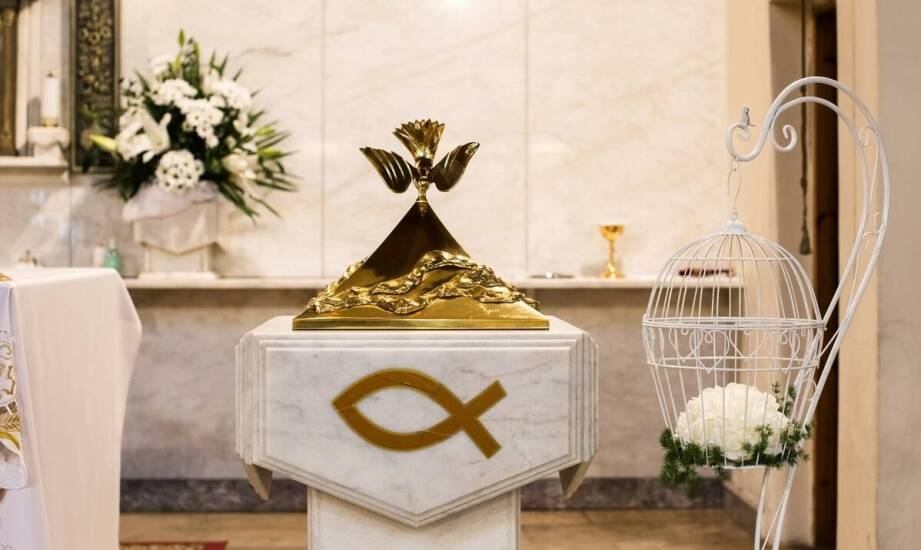
In Christian liturgy, the central element of the Eucharist celebration is the liturgical table, primarily understood as the altar—not merely a piece of furniture, but above all a sign and reference point for the entire congregation during the celebration of the Holy Sacrifice. This text concerns the table and its symbolism, presenting the significance and role of the table in liturgical ceremonies, based on the Church's tradition and theological understanding of the liturgy.
What role does the table play in the Eucharist liturgy?
The liturgical table in sacred ceremonies serves as the center of celebration, being not only the place of offering the Eucharistic sacrifice but also a sign of Christ's presence and a gateway to the salvific reality that the community celebrates and makes present. As an altar—the Lord's table—it recalls the memory of the Last Supper and reveals the eschatological meaning of the Eucharist, combining both the sacrificial dimension and the paschal feast, where the Body and Blood of Christ are made available for the faithful to partake. The symbolism of the table as a place of communal meal also emphasizes the Church's communion as God's people, gathered around the altar to participate in the mystery of salvation. At the same time, the table is a physical and spiritual point to which the liturgical setting refers—from the arrangement of the sanctuary to stoles and other elements of the priest's attire and liturgical decorations, which emphasize the dignity and sanctity of the celebration.
How does the table shape the community's relationship with the mystery of the Eucharist?
The table in the liturgy is ascribed the role of a place integrating the faithful in a sacramental experience, as it is around it that the church community gathers to celebrate Christ's sacrifice and receive His Body and Blood as nourishment for eternal life. Ars Sacra offers numerous liturgical elements, from tables and textiles to altar accessories, that help highlight the significance of this central space in the liturgy, also reflecting the Church's traditions and norms in preparing the Eucharistic venue. The table is accompanied by textile elements, such as altar cloths, frontals, or ceremonial instruments, each possessing its own symbolism and function in the ritual, emphasizing the unity and divine-human dynamic of the Eucharist. Preparing the table in accordance with centuries-old tradition is thus an expression of reverence for the mystery of celebration and a concern for the beauty and coherence of liturgical ceremonies.
How does the symbolism of the table connect tradition with community experience?
The liturgical table is attributed with far-reaching theological and symbolic meanings—it is not only a practical place for performing sacraments but also a marker of the salvific reality in which the Church participates. In theological terms, the table embodies both the sacrifice of Christ and His presence among the faithful, hence its central place in liturgical architecture and special treatment in ceremonies highlight its role as a medium of communication between earth and heaven. As an element of the ancient tradition of the Eucharist, the table strengthens the sense of community and unity in which the celebrant and gathered faithful become participants in the great mystery of salvation—an experience that goes beyond the bounds of an ordinary meal, transforming it into an encounter with God in Christ.
Summary of key information about the role of the liturgical table
The liturgical table in Eucharistic ceremonies is a primary sign and center of celebration, combining the sacrificial dimension with the paschal feast. Its symbolism extends to the biblical tradition and is reflected in the understanding of Christ's sacrifice, present in the liturgy. The central positioning of the table and its preparation in accordance with tradition, also through appropriate accessories and textiles, emphasize the unity of the faithful community and their participation in the mystery of salvation. The table is accompanied by a rich language of symbols and practices that enrich the liturgical experience and deepen the community's relationship with the mystery of the Eucharist.